
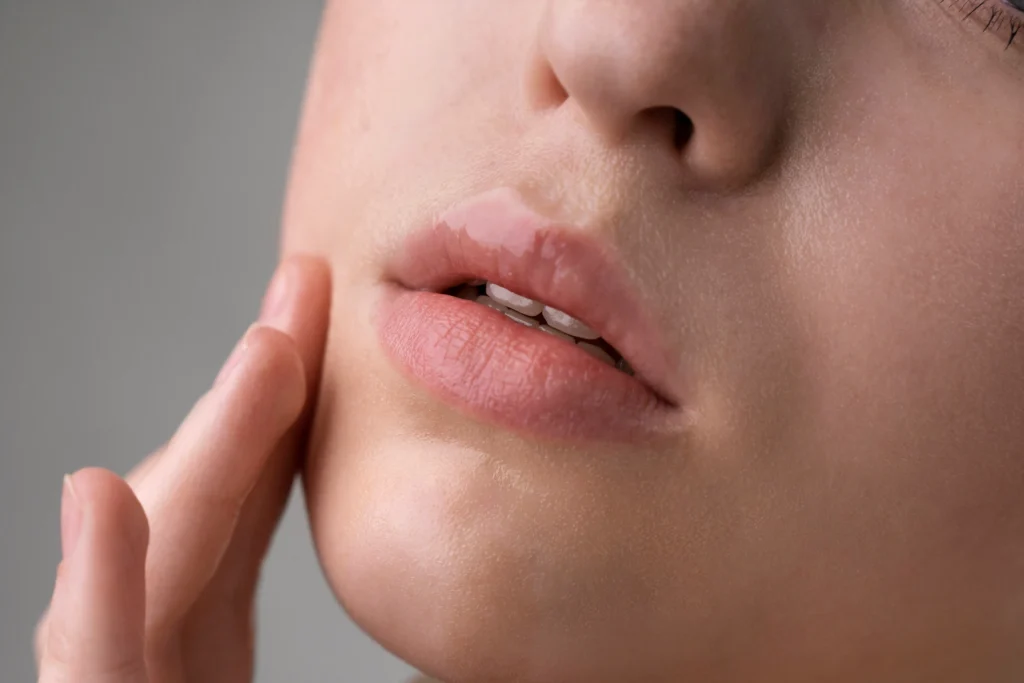
When someone searches how to plump their lips, what they want is more volume and a result that doesn’t look fake. Noticeable, but not overdone. That’s why this article gets straight to the point: we’re talking about fat transfer (lipofilling), a technique that uses your own tissue—no external substances—to shape and enhance the lips. Natural? Yes. Long-lasting? Also. Is it for everyone? Not always.
You’ll see why this option is gaining ground over the classic hyaluronic acid, what kind of results to expect, and how the process works. We’ll also go over real benefits, potential downsides, and how to know if this treatment fits your case—or if another option suits you better.
What “Plumping the Lips” Really Means and What Results Are Realistic
When people say they want to plump their lips, they don’t always mean just making them bigger. Often, they’re looking for more shape, a defined outline, restoring lost volume, or correcting asymmetries. Others may want a more hydrated look or to improve the perioral contour. The key is understanding that it’s not about random filling: the goal is to achieve lips that are harmonious with the face, not just larger.
That said, expectations matter. A great result isn’t one that screams “I had my lips done”—it’s one that looks natural at rest, while speaking, and when smiling. Subtle, as if your lips were always like that. That balance between volume and proportion is what makes the difference… and prevents regrets.
So… What’s the Best Treatment to Plump the Lips?
The “best” treatment depends on what you’re aiming for and how you want to look. If you want a controlled, tweakable change with the option of reversibility, hyaluronic acid is usually the go-to. It’s temporary, allows for precision, and the result can be adjusted or even reversed if needed.
On the other hand, if you’re after a longer-lasting, natural result using your own tissue, fat transfer might be the right fit. It not only adds volume but also improves skin texture and integrates smoothly with facial features. There are also cases where the goal isn’t more volume but rather an overall fresher appearance—in which case, other less invasive techniques may be a better fit.
Fat Transfer for Lip Augmentation: What It Is and Why It Doesn’t Involve External Substances
Fat transfer, or lipofilling, involves using your own fat to enhance lip volume and shape—no external fillers involved. You’re not injecting a commercial gel; you’re working with your own autologous tissue. That’s the big difference.
The process is simple to grasp: a small amount of fat is taken from a donor area, usually the abdomen, thighs, or inner knees. That fat is then purified to keep only the best-quality cells. It’s re-injected with very fine microcannulas, layer by layer, to carefully sculpt the lips. The goal isn’t just to “fill” but to refine the lip shape—Cupid’s bow, projection, outline, and balance.
Real Advantages of Lipofilling (and What They Mean in Practice)
One of the biggest advantages of lipofilling is that it’s biocompatible: it uses your own fat, so there’s no risk of rejection or allergic reaction. This means your body accepts it naturally, without unexpected inflammation. Because it’s living tissue, it integrates smoothly and moves with your expressions—unlike synthetic gels.
It’s also longer-lasting: while some fat may be reabsorbed early on, what remains tends to be stable. This results in fewer touch-ups and a more natural evolution. It can even improve the skin around the lips thanks to the regenerative components in purified fat—no miracles, but real improvements in texture and harmony.
Limitations and Downsides of Fat Transfer: What to Know Before Deciding
One key limitation is partial fat reabsorption: not all injected fat survives, and results vary by person. This is why some cases may need a follow-up touch-up. Also, fat transfer isn’t ideal if you want a tiny, ultra-precise change right away—it’s not a gel you can tweak with a few drops.
Since it’s a minor surgical procedure, it requires a proper medical setting, some planning, and usually higher cost. These factors may seem like drawbacks, but in truth, they’re part of a more personalized, stable and safe approach focused on long-term outcomes.
Who’s a Good Candidate for Lipofilling (And Who Might Need a Different Option)
Lipofilling is a great choice for people with naturally thin lips, those who’ve lost volume due to aging, or with mild asymmetries. It’s also ideal for anyone prioritizing natural results and avoiding synthetic fillers. These are patients who care more about looking subtly enhanced than making a dramatic change.
However, there are cases where this treatment may not be the best fit. For example, if you’re seeking dramatic volume, want very specific precision, or have very little donor fat, another option might be more suitable. People with unrealistic expectations or habits like smoking—which can affect recovery—also require closer evaluation. All of this is assessed individually during consultation.
Step-by-Step: What the Procedure Looks Like (Explained for Patients)
Everything starts with a consultation, where your lip shape, facial proportions, and aesthetic goals are discussed. It’s about more than adding fat—it’s about designing a balanced, attractive lip that fits your face.
On the day of the procedure, fat is extracted from a donor area (abdomen, thighs, etc.) and purified to keep only the best-quality cells. Then, using fine microcannulas, it’s injected into the lips in controlled layers. Once done, you’ll go home the same day with care instructions and follow-up appointments to track your progress.
Recovery and Aftercare: What to Expect
In the first 48–72 hours, swelling, tightness, and some bruising are normal. Cold compresses and sleeping with your head slightly elevated help reduce inflammation.
During the first week, things settle. If you work with the public, plan a few extra days off. Social life can resume quickly, especially with some makeup if needed.
In the first month, your body continues adapting the fat. Some of it may be reabsorbed, which is expected—it’s not yet the final result.
The final outcome is usually visible between one and three months. By then, swelling is gone, the shape is settled, and the lips look natural and integrated.
Results and Longevity: Natural Look, Lasting Effect, Realistic Expectations
What stands out with fat transfer is that it looks natural when still and in motion. Since the fat integrates as part of your body, it moves and ages with you. Unlike synthetic fillers, it won’t create an obvious “done” look. While some reabsorption happens, the remaining fat usually lasts longer than conventional fillers.
Touch-ups are possible if more volume is desired later or if reabsorption is higher than expected. It’s not permanent, but it’s a more stable and natural-looking option when you want lasting change without frequent upkeep.
Fat vs. Hyaluronic Acid: An Honest Comparison
Hyaluronic acid is a synthetic gel that’s reversible and easy to adjust, making it great for controlled, short-term enhancements. Fat transfer uses your own tissue, integrates naturally, and offers longer-lasting results, although it requires a small procedure and can’t be reversed with an enzyme. If you want flexibility and quick changes, hyaluronic acid may suit you. If you prefer a natural, longer-term solution, fat transfer might be the better choice.
Conclusion: When to Choose Fat Transfer to Plump Your Lips
Plumping the lips isn’t just about making them bigger—it’s about shape, volume, and balance with your face. Fat transfer stands out because it uses your own tissue, no synthetic materials, and delivers a result that’s natural, stable, and long-lasting. It’s not for everyone, but for those looking for something biologically integrated and low-maintenance, it’s a solid option.
Wondering if this is right for you? Book a consultation with Dr. Francisco Giraldo in Málaga and find out what fits your goals best.